
Climate Control Systems Built for Commercial Demands
RTU Installation in Rhode Island for efficient heating and cooling in retail, office, and light industrial spaces
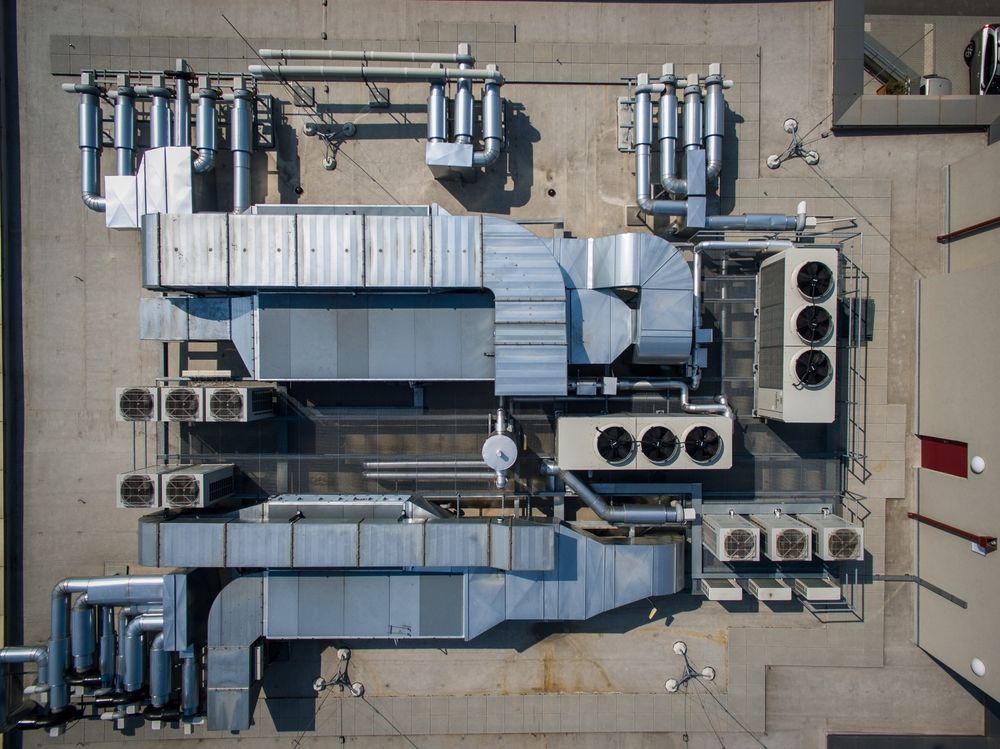
Rooftop units consolidate heating, cooling, and air handling equipment into a single weatherproof cabinet mounted above the building, freeing interior space while simplifying maintenance access. The installation involves setting the unit on structural curbs or support frames engineered to distribute weight across roof beams, then connecting refrigerant lines, electrical service, and ductwork to distribute conditioned air throughout the building. Sheet Metal and More handles RTU installations for properties where floor-mounted systems are impractical or where replacing aging rooftop equipment is necessary to maintain comfortable interior conditions.
Proper installation requires coordinating the unit's footprint with existing roof penetrations, verifying that structural supports can handle the equipment weight plus snow and wind loads, and sealing all duct connections to prevent conditioned air loss. Incorrectly positioned units create uneven temperature zones inside the building, while poorly sealed ductwork wastes energy and forces the system to run longer cycles. Electrical requirements vary based on unit tonnage, and most commercial installations demand dedicated circuits with appropriately rated breakers and disconnect switches mounted within sight of the equipment.
Request an on-site evaluation to confirm roof load capacity and assess ductwork modifications required for your building layout in West Warwick, Providence, Newport, and surrounding areas.
Why Placement and Connection Determine System Performance
Technicians position the unit to align with interior duct chases, minimizing horizontal duct runs that reduce airflow efficiency. The curb adapter is sealed with weatherproof membranes to prevent water intrusion around the roof opening, and vibration isolators are installed between the unit and the support frame to reduce noise transmission into occupied spaces below. Gas lines for units with heating capability must slope correctly to prevent condensate accumulation, and refrigerant lines are insulated to maintain temperature differential between indoor and outdoor coils.
Once the system starts, occupants notice consistent temperatures across all zones served by the ductwork, faster recovery times when doors open frequently, and quieter operation compared to older equipment. The building no longer experiences hot spots near windows or cold areas far from the unit, and thermostats reach setpoint without extended run times. Energy usage drops as modern units deliver higher SEER ratings and variable-speed fans that adjust output to match actual demand rather than cycling on and off at full capacity.
The installation includes startup procedures where refrigerant pressures are measured, airflow is balanced across all supply registers, and control sequences are programmed to match occupancy schedules. Buildings with multiple RTUs require coordinating unit operation to prevent one system from fighting another when zones overlap. Sheet Metal and More verifies all connections meet manufacturer specifications and local mechanical codes before turning the system over for daily use.
Common Questions About This Service
Property owners typically want to know about equipment lifespan, roof compatibility, and what happens during the installation process.
What preparation does the roof require before installation?
The structural engineer or contractor verifies that roof framing can support the unit weight, installs reinforced curbs if needed, and confirms that the roof membrane can be sealed properly around the new equipment footprint without creating leak points.
How long does a rooftop unit typically last in commercial service?
Most RTUs deliver fifteen to twenty years of reliable operation when maintained with regular filter changes, coil cleaning, and refrigerant level checks, though units in harsh climates or high-contamination environments may require earlier replacement.
What determines the correct unit size for a building?
Heating and cooling load calculations account for square footage, ceiling height, insulation levels, window area, occupancy density, and internal heat sources like lighting and equipment to specify tonnage that matches actual demand without oversizing.
Does the installation affect business operations inside the building?
Most rooftop work proceeds without disrupting interior activities, though connecting new ductwork to existing systems may require temporary shutdowns of specific zones during tie-in procedures.
What indicates the system is operating correctly after installation?
Airflow from all registers feels balanced, the unit cycles smoothly without short runs or continuous operation, indoor humidity stays within comfortable ranges, and utility costs align with the equipment's rated efficiency specifications.
Sheet Metal and More coordinates RTU installations with attention to structural requirements and long-term system performance. Contact the team to discuss equipment specifications and project timelines for your commercial property.