
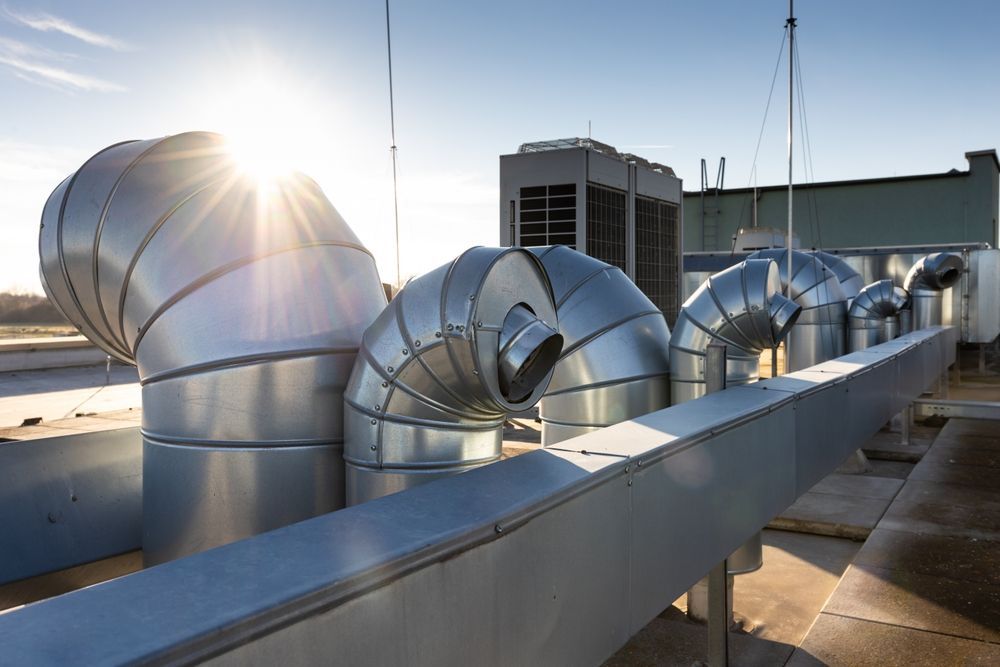
Ductwork Protection That Survives Every Season
Outdoor insulation in Rhode Island for rooftop systems and exterior ductwork exposed to year-round weather
Sheet Metal and More handles outdoor insulation for ductwork that faces direct weather exposure across West Warwick, Newport, East Greenwich, and nearby Rhode Island communities. When heating or cooling travels through unprotected ducts on rooftops or along exterior walls, temperature loss occurs before conditioned air reaches its destination. Specialized wrap systems prevent that energy waste while shielding metal components from moisture, ice expansion, and UV degradation common in New England's seasonal extremes.
This service involves wrapping exterior and rooftop ductwork with insulation designed specifically for outdoor use, then sealing it to block moisture penetration and maintain its protective capacity through freeze-thaw cycles. The materials used differ significantly from interior insulation—they resist water absorption, withstand temperature swings from summer heat to winter cold, and maintain their form under wind load and physical wear.
Schedule a rooftop assessment to evaluate current ductwork exposure and insulation performance.
Why Proper Sealing Determines How Long Protection Lasts
The durability of outdoor duct insulation depends on how seams and edges are sealed during installation. Water infiltration at joints or tears in the outer jacket leads to insulation saturation, which destroys thermal performance and accelerates corrosion on the underlying metal. Proper installation includes overlapping seams in a way that sheds water away from vulnerable points and using vapor-resistant barriers where condensation risk is highest.
After installation, you'll notice that ductwork no longer sweats during cooling seasons and ice buildup disappears during winter operation. Temperature differentials between supply vents decrease, meaning conditioned air arrives closer to its intended temperature. Commercial rooftop units especially show measurable efficiency gains because less runtime is needed to compensate for duct loss.
Sheet Metal and More uses insulation systems rated for continuous outdoor exposure, not repurposed interior materials that break down under moisture or UV contact. The wrap thickness is selected based on the duct's operating temperature range and the exposure severity at its specific location—shaded sections receive different treatment than those in full sun or standing water zones.
What to Know Before Insulating Exterior Ductwork
Property owners often ask about the practical side of protecting ductwork that's already been weathering the elements for years.
What happens if existing ductwork already shows rust or damage before insulation is added?
The underlying metal must be evaluated and repaired first—insulation traps moisture against corroded surfaces and worsens the problem rather than solving it.
How does outdoor insulation perform differently than the insulation inside attics or basements?
Exterior insulation faces direct rain, snow load, and UV exposure, so it requires a waterproof outer jacket and closed-cell construction that won't absorb water like fiberglass does.
When is insulating rooftop ductwork more critical than ground-level exterior runs?
Rooftop ducts experience greater temperature extremes due to sun exposure and wind, and they often run longer distances, which multiplies heat gain or loss along the entire path.
Why do some commercial properties in Rhode Island show ice formation on uninsulated rooftop ducts during winter?
Warm air traveling through cold metal causes condensation that freezes on the exterior surface, and repeated freeze-thaw cycles crack seams and joints over time.
What maintenance does outdoor duct insulation require after installation?
Periodic inspection for jacket tears or loose seams is recommended, especially after severe storms or ice events, but properly installed systems typically last years without intervention.
Sheet Metal and More provides detailed assessments of current ductwork condition before any insulation work begins, so you know exactly what repairs or preparation the system requires. Contact the team to arrange an evaluation of your exterior ductwork and discuss insulation options suited to your property's exposure conditions.