
Removing What Accumulates Inside Your System
Ductwork cleaning in Rhode Island for systems showing reduced airflow or properties completed after renovation work
Dust, construction debris, pet dander, and particulate matter settle inside duct systems over years of operation, building up at bends, joints, and low-velocity sections where air movement slows. This accumulation restricts airflow, forces HVAC equipment to work harder, and gets redistributed into living spaces every time the system cycles. Post-renovation properties face an additional problem: drywall dust, sawdust, and insulation fragments enter ducts during construction and continue circulating long after work is finished. Sheet Metal and More removes built-up material from duct interiors across Rhode Island, restoring airflow capacity and reducing the particulate load entering your indoor air.
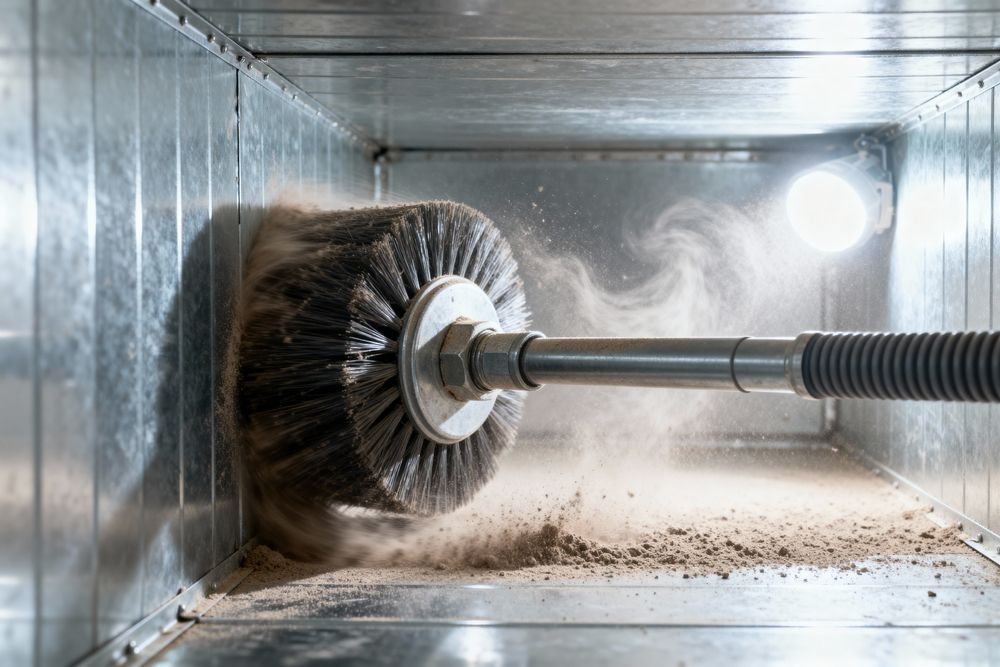
The cleaning process involves accessing ducts at multiple points, using specialized equipment to dislodge debris from duct walls, and extracting loosened material before it can redeposit elsewhere in the system. This approach differs from simply vacuuming register openings, which addresses only the visible end points while leaving the bulk of accumulated material untouched.
Arrange an inspection to evaluate current duct condition and determine whether cleaning is warranted in West Warwick, East Greenwich, Newport, and surrounding areas.
What Cleaning Actually Accomplishes
Duct cleaning targets the layer of accumulated material that coats interior surfaces and reduces effective duct diameter. Older systems or those in homes with pets, smokers, or high dust exposure develop thicker buildup that measurably restricts airflow. The service also addresses biological growth in systems where moisture has entered ducts through leaks or condensation, though moisture sources must be corrected separately to prevent recurrence.
After cleaning, airflow increases noticeably at registers because the duct's full diameter is available for air movement again. Dust accumulation on furniture and surfaces slows because the system is no longer redistributing stored particulate with every cycle. HVAC runtime often decreases slightly as the system meets demand more efficiently without fighting airflow restriction.
The service works best when the HVAC system itself is functioning correctly—cleaning doesn't compensate for undersized ductwork, leaking joints, or equipment problems. Sheet Metal and More evaluates the overall system during the cleaning process and identifies issues that affect performance beyond what cleaning alone can address.
Answers to Frequent Service Questions
Homeowners considering duct cleaning often want to know what the process involves and what results they can expect.
What actually gets removed during ductwork cleaning?
Dust, debris, pet hair, drywall particles, insulation fragments, and other material that has accumulated on duct interior surfaces over years of system operation.
How often should duct cleaning be performed?
Most residential systems benefit from cleaning every five to seven years, with shorter intervals for homes with pets, smokers, or occupants with respiratory sensitivities.
Why is post-renovation cleaning particularly important?
Construction generates large volumes of fine dust that infiltrates ductwork and continues circulating for months, coating surfaces and reducing air quality long after work is complete.
What indicates that a duct system in Rhode Island needs cleaning?
Visible dust discharge from registers, reduced airflow compared to previous performance, musty odors when the system operates, or recent renovation work all suggest cleaning is warranted.
Does cleaning damage ductwork or require repairs afterward?
Properly performed cleaning does not harm ducts, though the process sometimes reveals existing leaks, disconnected sections, or damage that was previously hidden by debris.
Sheet Metal and More provides ductwork cleaning with minimal disruption to your property, completing most residential systems in a single service visit. Request a system evaluation to determine whether cleaning will meaningfully improve your indoor air quality and HVAC performance based on your system's current condition.