
Ventilation Systems That Support Daily Operations
Commercial Sheet Metal Services in Rhode Island for offices and retail spaces with inadequate airflow or outdated duct systems
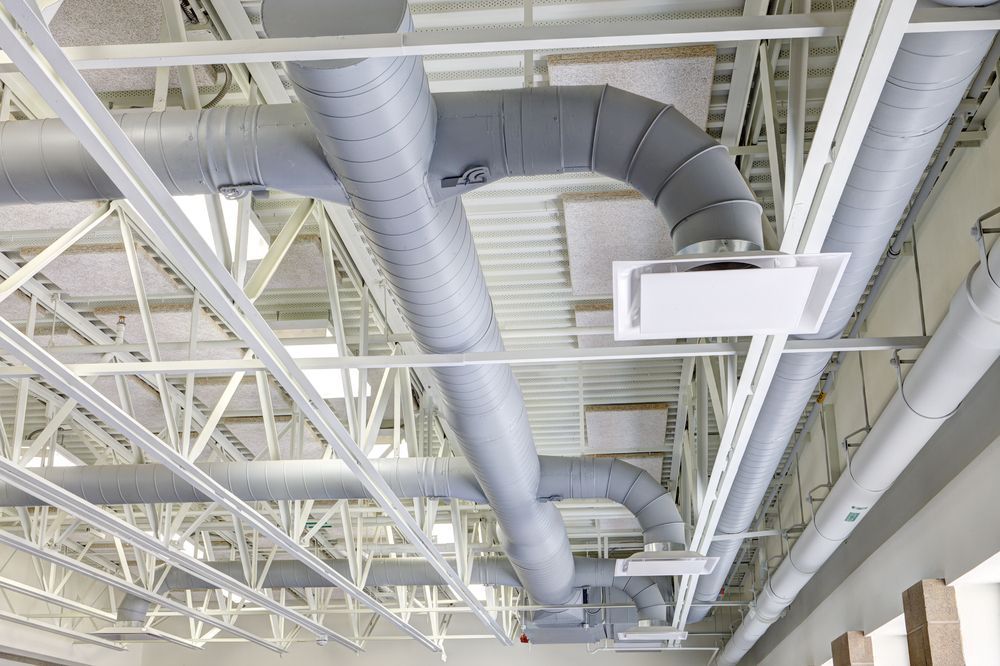
Commercial properties (under 120,000 BTU) demand duct systems scaled for higher airflow volumes, extended operating hours, and layouts that coordinate with electrical, plumbing, and structural elements already in place. Sheet Metal and More fabricates and installs components sized to meet commercial ventilation standards, whether you're handling a tenant buildout, upgrading an underperforming system, or installing ductwork for new construction. Properly designed systems reduce energy waste, maintain consistent temperatures across open floor plans, and minimize the noise that disrupts work environments.
Larger duct sections handle the cubic feet per minute required for spaces with multiple zones, high ceilings, and occupancy loads that vary throughout the day. Installation coordinates with other trades to avoid conflicts with sprinkler lines, cable trays, and structural beams, keeping projects on schedule and reducing downtime for occupied buildings.
Arrange an on-site evaluation to assess current system capacity and discuss layout options that work with your building's existing infrastructure.
How Commercial Systems Address Performance Demands
Commercial fabrication accounts for airflow calculations based on square footage, ceiling height, and usage patterns, with duct sizing and placement designed to distribute conditioned air evenly without creating dead zones or areas with excessive velocity. Sheet Metal and More installs trunk lines, branch ducts, and fittings that route around obstacles while maintaining smooth transitions that prevent pressure drops and turbulence.
Once the system operates, employees notice stable temperatures across workstations, quieter operation during business hours, and faster temperature recovery after doors open frequently or occupancy spikes during peak periods. Utility costs often drop when ductwork no longer leaks conditioned air into ceilings or wall cavities.
Work includes balancing dampers at branch takeoffs to adjust airflow by zone, sealing joints with mastic or tape rated for commercial applications, and insulating ducts that pass through unconditioned spaces to prevent heat gain or loss. Access panels may be installed at key points for future maintenance without requiring demolition of finished ceilings.
Answers to Frequent Service Questions
Commercial ventilation projects involve coordination, compliance, and performance considerations specific to occupied buildings and business operations.
What codes apply to commercial ductwork installations in Rhode Island?
Commercial systems must meet state mechanical codes covering duct sizing, clearances from combustibles, fire damper placement at rated walls, and insulation requirements for energy efficiency. Inspections verify compliance before systems go into operation.
How long does a commercial duct installation take for a tenant buildout?
Timeline depends on square footage and complexity, but typical office spaces require several days for fabrication and installation once other trades complete rough-in work. Coordination prevents delays and keeps the project moving toward occupancy deadlines.
Why do some commercial spaces have uneven temperatures despite new HVAC equipment?
Undersized or poorly routed ductwork restricts airflow to certain zones, causing temperature imbalances even when the air handler operates correctly. Duct redesign or additional branch lines resolve distribution problems without replacing equipment.
What materials work best for commercial applications with high airflow demands?
Galvanized steel in heavier gauges withstands higher static pressures and resists damage from vibration better than residential-grade materials. Spiral duct offers strength and smooth interior surfaces that reduce friction losses over long runs.
How does commercial ventilation work differ from residential installations?
Commercial projects involve larger volumes, stricter code requirements, coordination with multiple trades, and layouts designed for open floor plans rather than individual rooms. Installation schedules often work around business hours to minimize disruption.
Sheet Metal and More handles fabrication, installation, and coordination with your project timeline. Contact the team to review your building's ventilation needs and discuss system options that support your operations.