Safe Venting That Prevents Buildup
Dryer vent exhaust install in Rhode Island for new construction, replacement systems, and properties with improper venting
Dryers generate lint-laden moisture that must exit the building through properly routed vent pipe, but many installations use flexible plastic or foil duct that sags, crimps, and traps lint at low points and bends. These material choices violate building codes specifically because they create fire hazards—lint accumulation inside vents ignites easily and the ribbed interior of flexible duct accelerates buildup. Sheet Metal and More installs dryer vent exhaust systems using smooth-wall metal duct routed along the shortest practical path to the exterior, reducing lint accumulation points and maintaining the airflow velocity needed to carry moisture and particles out of the building rather than depositing them inside the vent.
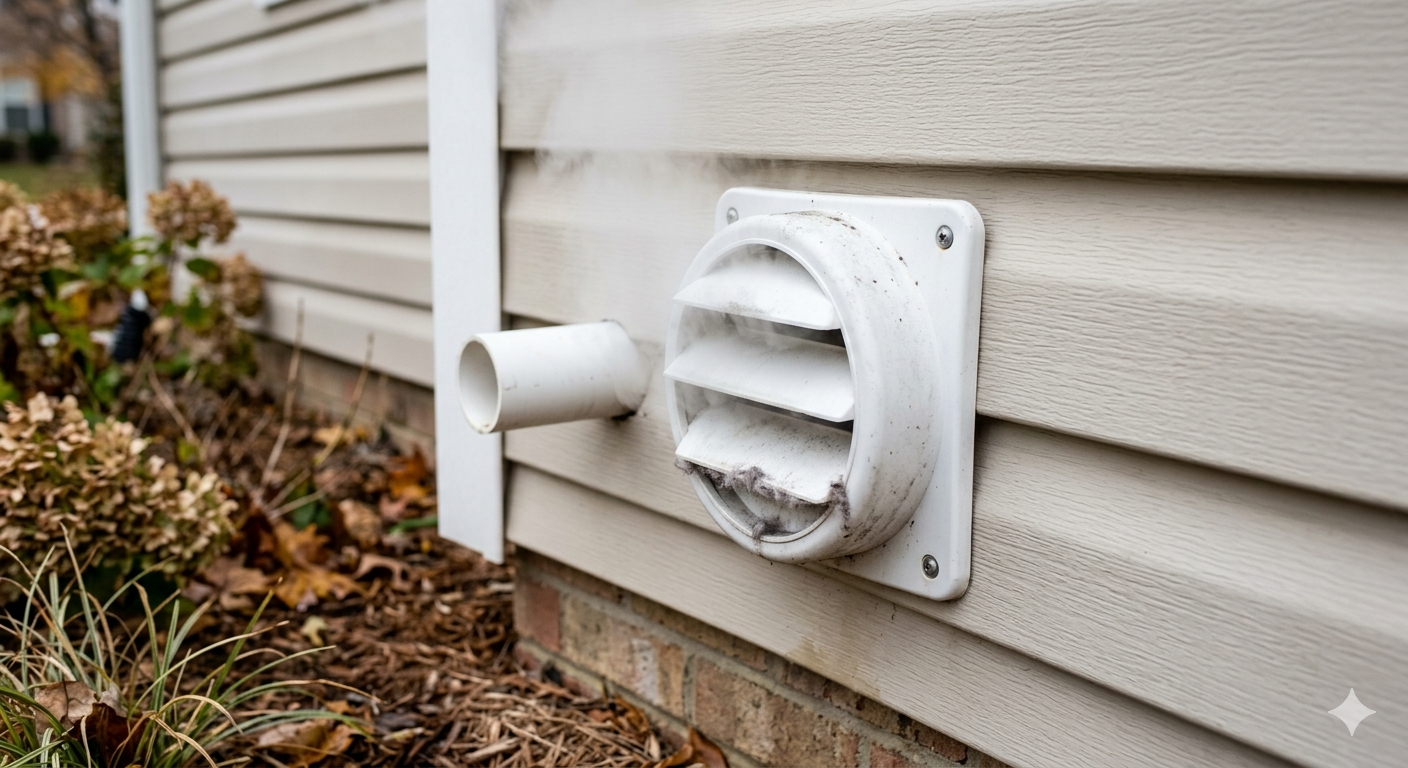
Installation involves determining the most direct route from the dryer location to an exterior wall, installing rigid metal duct with sealed joints, and terminating the vent with a dampered cap that prevents backdrafts and pest entry. Vent runs are kept short and bends are minimized because every 90-degree turn and additional foot of duct length reduces exhaust velocity and increases drying time.
Schedule a site assessment to review vent routing options and determine the best path for your installation in West Warwick, Cranston, Providence, and surrounding areas.
Why Vent Placement and Material Matter
Building codes limit dryer vent length and require specific materials because these factors directly affect fire risk and dryer performance. Vents exceeding code-allowed length or using unapproved materials fail inspection and create documented safety hazards. Sheet Metal and More designs vent routes that comply with current standards while minimizing the run length that affects drying efficiency—each additional foot of vent and each elbow reduces airflow and forces the dryer to run longer to achieve the same dryness level.
After proper installation, drying cycles complete faster because moist air exits efficiently rather than lingering in long or convoluted vent runs. Lint accumulation inside the vent slows dramatically since smooth metal interiors don't trap fibers the way ribbed flexible ducts do. The exterior vent cap remains clear of obstruction and operates correctly because proper damper function depends on adequate airflow velocity.
This service applies to new dryer installations, replacements where existing vents fail inspection or show excessive lint buildup, and upgrades from non-compliant materials. The work includes removing old venting if present and sealing any wall penetrations that are no longer needed.
What Property Owners Usually Ask
Questions about dryer venting typically focus on safety compliance and the practical differences between installation approaches.
What makes rigid metal duct safer than flexible vent materials?
Metal duct doesn't support combustion, maintains its shape without sagging, and has smooth interiors that resist lint accumulation compared to ribbed plastic or foil.
How does vent length affect dryer performance and fire risk?
Longer vents reduce exhaust velocity, which allows lint to settle inside the duct and forces the dryer to run longer, generating more heat and additional lint.
Why do building codes in Rhode Island specify maximum vent lengths and turn limits?
These restrictions maintain sufficient airflow velocity to carry moisture and lint out of the building, preventing the accumulation that causes fires and performance problems.
What happens when dryer vents terminate in crawl spaces or attics instead of exterior walls?
Moisture discharge into enclosed building cavities causes mold growth, insulation damage, and structural rot while creating a concentrated lint deposit that presents a fire hazard.
How often should dryer vents be inspected after installation?
Annual inspection of the exterior termination and periodic interior inspection ensure the vent remains clear and functional, though properly installed metal vents require far less maintenance than flexible alternatives.
Sheet Metal and More handles dryer vent installation across West Warwick and neighboring communities with attention to code compliance, efficient routing, and long-term safety. Get in touch to discuss your dryer vent requirements and schedule installation that meets current building standards while supporting optimal dryer performance.